Energy Window International (Media) – The global oil and gas sector operations today are groaning under extreme conditions, consequently making demand for oil and gas sector materials correspondingly high. It also requires that materials which are certified for capacity and strength to withstand wears and corrosions, temperatures, pressure fluctuations as well as mechanical stress be applied often during operations, condition or region notwithstanding. The question then arises: Which materials therefore have the ability to cope with these diverse requirements and conditions?
Ahead of the Petrochemical & Refining Congress (PRC) Europe 2026 in Amsterdam, an expert in wear‑protection solutions – Deloro outlines the specific material requirements of the oil and gas sector, demonstrating how Stellite alloys perform reliably in particularly demanding environments — a topic so critical to the key themes to specifically address energy efficiency, decarbonisation, and process safety during the PRC Europe.
Deloro Wear Solutions offer further analysis.
The fact that drilling and extraction processes usually take place in remote locations, such as in the ocean, makes material selection complex and challenging. Reliable and durable materials are therefore essential and the choice of the right material and the use of suitable manufacturing processes are crucial to ensure the long-term and safe functioning of the components used.
Stellite alloys combine all the requirements of the oil and gas industry in one: wear protection, temperature, pressure and corrosion resistance. The cobalt-based alloys offer superior performance and durability compared to alternative materials, even under extreme operating conditions. In the oil and gas industry, they are suitable for use in both upstream and downstream applications.
Upstream: Stellite components for sensitive drilling processes and measurements
The upstream sector, also known as exploration and production (E&P), encompasses all activities related to the search for, exploration and production of natural gas and crude oil. Two technologies are used here that provide important data in real time during the drilling process: Measurement-While-Drilling (MWD) and Logging-While-Drilling (LWD). With both technologies, the constant rotation during the drilling process results in mechanical wear, high pressures and a high level of heat generation – particularly in deep-sea applications and high-pressure extraction. At the same time, water, sludge and sand lead to abrasion and corrosion. This is an enormous load spectrum that the materials have to withstand.
Not every material is equally suitable for every application. Rather, the choice of the right material depends on the specific load to which the component is exposed. It is therefore crucial to precisely analyze the load spectrum and select the material that best meets these requirements. Stellite 6 components have excellent all-round properties and are therefore regarded as the industry standard for general wear resistance applications in the oil and gas production sector, which have to withstand sandy drilling fluids, for example. The alloy has excellent resistance to many forms of mechanical and chemical degradation over a wide temperature range and retains reasonable hardness at high temperatures. The non-magnetic properties of Stellite alloys also make them ideal components in directional tools in MWD or LWD applications, as they do not affect the measurement of the systems.
Combined load collectives in the downstream sector
The downstream sector, which includes the refining, processing and marketing of crude oil and natural gas products, also places high demands on materials science. Refineries in particular are extremely demanding environments for materials. In crackers and heat exchangers, they have to withstand combined stress collectives of corrosion, erosion and adverse temperatures. As every shutdown of a plant involves an enormous amount of time and money, the components here also have to work reliably over the entire planned life cycle – just like in the upstream sector. Cast and armored upstream and downstream pump and valve parts made of Stellite extend the service life of critical control and pump systems in this area. Metallic seals are of particular interest here, as they are significantly more wear-resistant than other materials such as plastic.
However, not only very high but also extremely low temperatures pose a challenge for materials. Particularly with cryogenic gases (such as LNG), optimum sealing is essential. In cryogenic applications, Stellite 21 is therefore suitable for critical valve parts that need to exhibit good ductility and erosion resistance.
Refineries: Thermowells and nozzles defy extreme conditions
Another important topic in refineries are thermowells, often also referred to as thermowells or immersion sleeves. In order for thermocouples to function under extreme conditions such as extreme heat, erosion and abrasion in refineries, the thermowells must have suitable wear protection. Thermowells seal thermocouples from the environment and protect them from abrasive temperature-related and tribological stresses. They therefore form a core component of process monitoring and make it possible to change or remove the thermocouples without interrupting the process. Depending on the application, protective tubes made of solid cast Stellite, nickel-based tubes with Stellite tips welded on or steel protective tubes with Stellite armor applied are suitable for this purpose.
Another fundamental process in refineries is fluid catalytic cracking (FCC) for converting heavy oil fractions into lighter, more valuable products such as gasoline or olefins. FCC processes take place at temperatures of up to 700°C, so the materials must retain their strength and structural integrity even under extreme conditions. The materials must be resistant to the highly corrosive chemical reactions that take place in the FCC process. These include reactions with sulphur compounds and other aggressive chemicals. At the same time, they are subjected to mechanical stresses caused by pressure, flow and particle abrasion. The catalyst in an FCC system is present in the form of fine particles that move through the system at high speed. These particles have an abrasive effect on the materials they come into contact with. Stellite nozzles and pumps can withstand this load.
As one of the world’s leading suppliers of metallic wear protection, cast components and component finishing, Deloro Wear Solutions GmbH has various solutions for the oil and gas industry to maximize plant uptime and process reliability. Stellite already has a long history in the oil and gas industry.
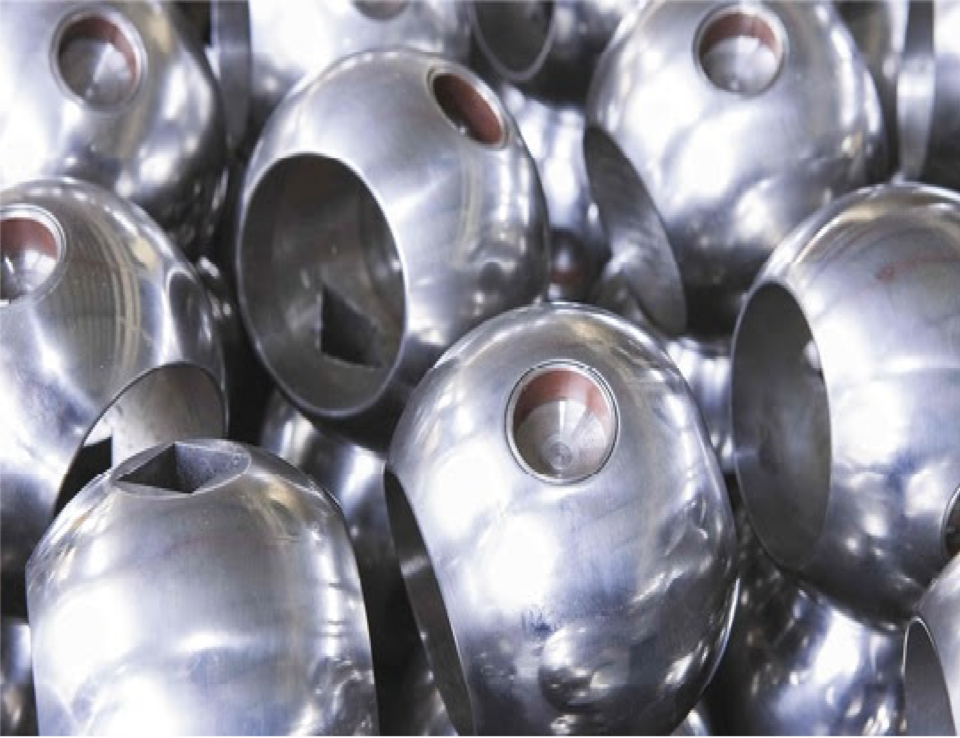
Deloro offers on-specification manufacturing of rotors, stators, impellers, centralizers, landing sleeves, turbine sleeves, flow diverters, fishing components, drill heads, wear strips, stabilizers or other cast and coated parts. Thermal protection tubes, pump and valves such as slide valves, needle valves, butterfly valves or spherical valves are just as much a part of the portfolio as FCC regenerator air grid nozzles, FCC reactor inlet nozzles and steam scraper nozzles. Deloro has also proven to be a reliable partner in the oil and gas industry when it comes to developing specifications for new applications or optimizing tribological systems.
Source: PRC Europe