By Ejekwu Chidiebere
Energy Window International (Media) – Eni has just announced a new giant gas discovery at the Geliga‑1 exploration well, drilled in the Ganal block in the Kutei Basin, offshore Indonesia, approximately 70 km from the East Kalimantan coast. Preliminary estimates according to the Italian firm indicated in-place resources of approximately 5 trillion cubic feet (Tcf) of gas and 300 million barrels of condensate in the encountered interval.
Eni told Energy Window International (Media) in an email that the Geliga‑1 well was drilled to a total depth of around 5,100 meters in a water depth of about 2,000 meters and encountered a significant gas column in the targeted Miocene interval which it said was characterized by excellent petrophysical properties. A Drill Stem Test (DST) Eni said is planned to assess the productivity of the reservoir. The Geliga‑1 discovery is part of a highly successful exploration track record in the Kutei Basin and follows the Geng North giant discovery made in late 2023 only 20 km south of Geliga, as well as the more recent Konta‑1 well discovery announced in December 2025, the Italian energy giant said. These results the company further said confirmed the significant potential of the basin’s gas play and the scalability of resources in the area.
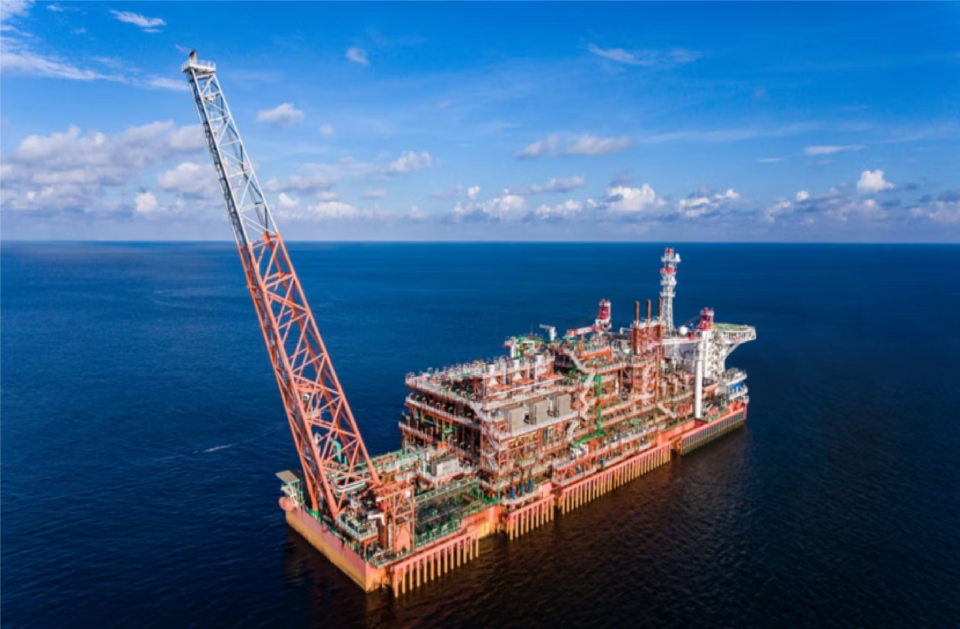
The Geliga‑1 discovery also follows, according to Eni, the recent Final Investment Decisions (FIDs) for the Gendalo and Gandang gas project (South Hub), and for the Geng North and Gehem fields (North Hub). Adding that the North Hub project is expected to leverage a newly built FPSO with a handling capacity of 1 bscfd of gas and 90,000 bpd of condensate, as well as the existing Bontang LNG Plant.
Eni said analyses are still ongoing to evaluate accelerated development options, also considering the proximity to existing and planned infrastructures, which offer potential synergies in terms of time‑to‑market and cost optimization, the company stated. The new discovery Eni further said is adjacent to the not‑yet‑developed Gula gas discovery (2 Tcf of gas in place with 75 million barrels of condensate). It stated that the initial assessments had indicated that the combined Geliga and Gula resources have the capacity to produce an additional 1 bscfd of gas and 80,000 bpd of condensate, thereby opening the possibility—among others—of establishing, in a fast‑track mode, a third production hub in the prolific Kutei Basin by mirroring the development concept of the ongoing North Hub project. It said studies were also underway to evaluate a further rejuvenation of Bontang by resuming additional liquefaction capacity beyond what is already planned for the North Hub development, thus further extending the plant’s operational life.
The company said that over the past six months, it has successfully drilled four other exploration wells within the same basin. Adding that the exploration campaign will continue with one additional well planned in 2026 and two further wells in 2027.
The Geliga‑1 discovery is located in the Ganal PSC, operated by Eni with an 82% interest, while Sinopec holds the remaining 18%. Eni said the Ganal PSC is part of a portfolio of 19 blocks (14 in Indonesia and 5 in Malaysia) that will be contributed to Searah, a jointly controlled company between it and Petronas announced in November 2025. Eni disclosed that the new company will integrate assets, technical expertise and financial capabilities to support growth and strengthen its position in Southeast Asia. Searah’s business plans according to Eni’s statement include the development of approximately 3 billion barrels of oil equivalent (boe) of discovered resources and the unlocking of significant exploration potential. Closing of the transaction is expected within Q2 2026. It adds that the valorization to a third party of a 10% stake in its Indonesia portfolio withheld from the Searah transaction was underway and expected to be concluded this 2026. The Geliga discovery adds to the value of this sale.
Eni says it has been present in Indonesia since 2001 and currently holds a diversified upstream portfolio across exploration, development and production activities. Net production is approximately 90,000 barrels of oil equivalent per day, mainly from the Jangkrik and Merakes fields offshore East Kalimantan, the company said.