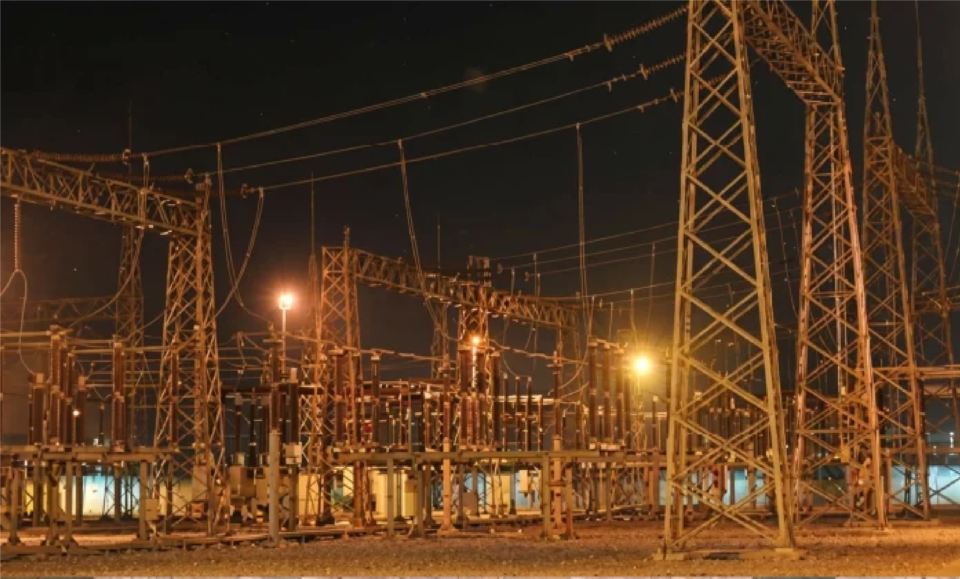
The power sector of Nigeria represents a profound paradox: a nation with immense natural gas and hydroelectric resources that has, for decades, struggled to provide consistent electricity to its citizens. Despite numerous reforms, privatizations, and promises, the sector remains defined by chronic inefficiency and failures, with recurring decimal of grid collapse, year on year.
Here Dr Babalola, Nigeria’s former Minister of Power takes a constructive swipe at the vicissitudes, ineptitude, deliberate inefficiency, the dramatic and abysmal failures defining the sector and simultaneously highlighting, in black and white, all the cogs at the wheels of progress within the system. He Wrote.
Every year, sometime between February and April, Nigeria’s electricity crisis reaches its yearly nadir. Temperatures climb past 38 degrees across the Middle Belt and the North, past 40 in the most exposed zones. Air conditioners labour without respite. Generators run through the night. And the grid – always struggling, never adequate – tips from its habitual underperformance into something closer to collapse. Unplanned outages multiply. Industrial production stalls. Households endure the indignity of darkness at the exact moment the heat is most punishing.
This happens every year. It has happened for decades. It will happen again.
What is remarkable is not the crisis itself. What is remarkable is the response to it: the air of surprise, the reactive scrambling, the explanations that attribute each year’s failure to the same undifferentiated general dysfunction that is held to explain everything else about Nigeria’s electricity industry.
The seasonal dimension – the fact that the crisis arrives on a predictable schedule, driven by forces that are observable, measurable, and well-understood – is rarely the subject of serious public analysis. The annual worst period is folded into the annual background noise, and the opportunity to understand it precisely – and to address it with precision – is lost.
This policy series is an attempt to break that pattern.
What this series argues
The central argument of this series is straightforward. Nigeria’s annual February-April electricity crisis is not a random expression of general sector dysfunction. It is a structurally predictable event – the consequence of a specific and identifiable collision between two forces that move in opposite directions simultaneously every year. On one side, cooling demand rises sharply as temperatures peak across much of the country. On the other hand, the hydroelectric stations that supply a substantial share of the grid’s electricity find their reservoirs at their annual nadir, their output curtailed precisely when it is most needed. These two forces – a demand spike driven by meteorology and a supply contraction driven by hydrology – converge in a system that carries no meaningful reserve capacity to absorb their combined impact. The result is not a surprise. It is a schedule.
That is the first layer of the argument. The second is more specific and, in some ways, more troubling. Nigeria’s original electricity planners and decision makers understood this problem. The generation portfolio they designed in the 1980s and 1990s included an explicit solution to it: Shiroro Hydroelectric Power Station on the Kaduna River, commissioned in 1990, was engineered not as a continuous generation asset but as a strategic reserve – a fast-response peaking plant, its 7-billion-cubic-metre reservoir kept charged precisely for the moments of maximum system stress.
The logic was sound. What dismantled it was not ignorance but operational drift: The slow, unannounced repurposing of a strategic asset into a workhorse, as the thermal baseload it was designed to complement failed to materialise and system operators, under perpetual pressure to maximise available generation, ran everything that worked. Shiroro became a baseload plant by necessity. Its reservoir entered each dry season already drawn down. The insurance policy was spent before the crisis it was designed to cover arrived.
The third layer of the argument concerns what will not fix the problem. Nigeria’s electricity policy discourse is overwhelmingly structured around a single diagnostic claim: that tariffs are not cost-reflective, and that cost recovery is the key to sector recovery. Whatever its partial validity in other contexts, this argument is entirely unrelated to the seasonal crisis. A tariff increase does not raise reservoir levels. It does not repair vandalised gas pipelines. It does not restore reserve capacity to a system that has none. Applying the tariff argument as a universal remedy – as current policy discourse routinely does – is not merely insufficient; it displaces the operational and planning interventions that the seasonal crisis actually requires.
The series does not end with a diagnosis. Its third paper turns to remedy – identifying the operational measures that could begin immediately, the medium-term structural changes to the generation mix that would address the seasonal supply gap at its root, and the institutional reframing that serious planning requires. Some of the most important remedies cost almost nothing. They require only that the people responsible for managing Nigeria’s grid be willing to read the data that has been available to them for decades, and act on what it says.
The papers in this series
Paper 0ne – The seasonal demand-supply scissors establish the analytical foundation of the series. It diagnoses the February–April stress period as the predictable convergence of peak cooling demand and minimum hydropower output in a system with no reserve margin to absorb the shock – what engineers call a seasonal demand-supply scissor.
It examines the meteorological drivers of the demand spike, the hydrological mechanics of the supply contraction, the chronic inability of the thermal fleet to compensate, and the governance failures that allow a predictable annual crisis to be treated, year after year, as though it were an act of God rather than a foreseeable management challenge. It argues that the seasonal crisis is analytically distinct from Nigeria’s chronic electricity dysfunction – and that conflating the two makes targeted solutions impossible.
Paper two – The Shiroro story: Operational drift and design inversion narrow the lens to a single asset to illuminate a system-wide failure. Shiroro Hydroelectric Power Station was designed explicitly as Nigeria’s insurance against seasonal electricity stress – a peaking and reserve plant, engineered for rapid deployment at moments of maximum system need, its reservoir a stored-energy battery that was not to be discharged before the crisis arrived.
This paper traces how that design logic was quietly dismantled: how Shiroro drifted from strategic reserve to de facto workhorse as the surrounding portfolio failed to evolve as planned, and how the consequences of that drift compound each year in the February–April window. The Shiroro story is not merely a case study in mismanagement. It is a microcosm of Nigeria’s broader electricity governance failure – and a reminder that the country has, at various points, understood its problems well enough to design serious solutions to them.
Paper three – from diagnosis to remedy: What must be done, and what will not work, draws the analytical threads of the first two papers together and turns them toward policy. It begins by establishing why the dominant remedy on offer – tariff reform – does not address the seasonal crisis, however legitimate it may be in other dimensions of sector reform. It then sets out a structured programme of interventions: the operational measures that can begin without new infrastructure, the medium-term changes to the generation mix that would directly address the seasonal supply gap, and the institutional reforms – chiefly, the establishment of mandatory seasonal adequacy planning – that would transform the accountability framework of Nigeria’s electricity system. The paper argues that the starting point for all of this is diagnostic honesty: A willingness, in policy circles, regulatory bodies, and public discourse, to describe the problem with the specificity it deserves.
A note on scope and method
This series is explicitly diagnostic and policy-oriented. It does not attempt a comprehensive treatment of Nigeria’s electricity industry – a subject of enormous complexity that spans generation, transmission, distribution, regulation, commercial structure, and macroeconomic context. Its scope is defined by its argument: Understanding the seasonal crisis, tracing its roots, and identifying what can be done about it.
The analysis draws on publicly available data – hydrological records, NERC quarterly performance reports, generation dispatch data, and the engineering literature on power system design – interpreted through the lens of power system economics and policy analysis. Where data are incomplete or contested, this is noted. The papers make analytical claims, not political ones. Their purpose is to advance the quality of public understanding and policy deliberation on a problem that has been inadequately diagnosed for too long.
The series is addressed to a wide audience: Nigerian policy professionals, regulators, and industry practitioners who engage directly with these questions; the broader educated Nigerian public that lives with the consequences of electricity failure and deserves a more honest account of its causes; and the international development and energy finance community whose programmes and investments in Nigeria’s electricity industry would benefit from the more granular diagnosis this series attempts to provide.
Dr Babalola is a former Minister of Power and was one of the principal architects of Nigeria’s electricity sector reform. Through Exenergia Limited, he works on infrastructure development, electricity industry policy, regulatory economics, and the macroeconomic dimensions of energy infrastructure failure.