
By Ejekwu Chidiebere
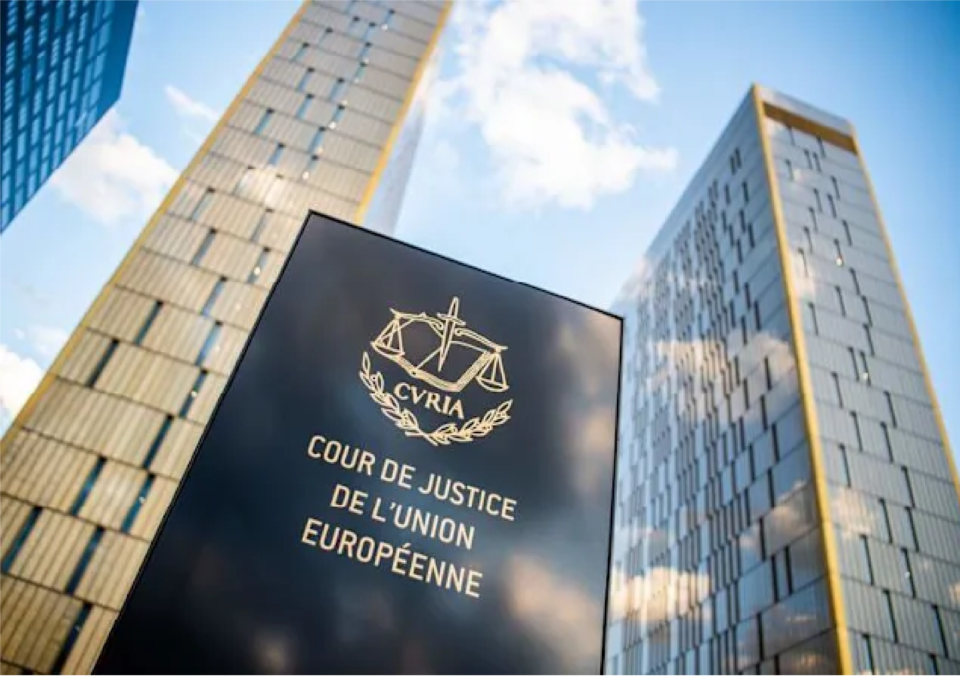
Energy Window International (Media) – The European Commission (EU) said they have taken Portugal, Greece and Malta to the Court of Justice of the European Union for failing to transpose the Commission’s new targets for renewable energy, including green hydrogen and its derivatives, into national legislation. The regulation according to the Union was part of a broader enforcement measure by the Union to ensure member countries complied with its key environmental and financial rules.
Environmental protection and single market regulation laws were put in place to guide against air pollution and waste mismanagement, as well as financial and money laundering activities within EU member countries.
The “Habitats Directive” under which Portugal was taken to court is, as the Union said in a publication, one of the its core Environmental laws which require, without any exception, the obligation of all EU member countries to identify “important natural habitats and endangered species, designate them as Special Areas of Conservation” (SACs) and more fundamentally, put in place legal protection and management plans while ensuring that the rules are carried out, and within the strict timeline which is usually 6 years according to the Commission.
According to the Commission, and based on the ruling by the European Court of Justice, Portugal has been held for failure to “properly designate dozens of protected sites” where about 55 areas were still, in the opinion of the institutions, “not legally protected.” This was besides the country’s belated action “far beyond the legal deadline” that the court had given that it should take responsibility of certain important ecosystems which it never complied with legally and promptly, and the prolonged failure upon which penalties of Ten Million Euro (Upfront), and Forty-One Thousand Euro (Daily Penalty) were imposed by the Court, according to The Guardian Publication. The court also and according to the publication had described the breach as “particularly serious” because of the “country’s rich biodiversity and long delay.”
This is not just environmental idealism—it has real EU-wide implications including its strategic design to protects shared ecosystems across borders, prevention of habitat destruction from infrastructure or industry, maintenance of biodiversity that supports agriculture, fisheries, and climate stability, and “failure by one country weakens the entire EU environmental framework.”
It would be recalled that in the past Ireland had also failed in its obligations to abide by the EU rules particularly on “Urban Waste Water Treatment” directive – more specifically its failure to properly treat sewage in multiple towns and cities, untreated and or “insufficiently” treated wastewater discharged into rivers and coastal waters. For the Union these directives matter because of its implications on public health, fisheries, and tourism particularly in coastal regions.
Greece also was held for poor landfill management and illegal dumping sites, failure to modernize waste treatment systems, allegation for repeated actions and attraction of multiple fines year on year for waste mismanagement.
Spain was incriminated on “Water Framework Directive” and specifically about its failure to ensure water bodies meet ecological quality standards, overuse and pollution of rivers and groundwater – conditions which were supposed to be sensitive in Spain due to water scarcity and agriculture pressure.
France was held for what the Union called “Nitrates Directive” which means excess agricultural runoff polluting water with nitrates, inadequate protection of vulnerable zones both of which are tied to intensive farming practices which has also been politically contentious. Germany’s case also fell within this description but more specifically its “slow implementation of stricter farming controls.”
Poland was held for breach of “persistent high levels” of air pollution directive especially “coal-related” and according to the Directive is failure to meet PM10 and PM2.5 limits which also have serious health implications, especially in urban areas.
Bulgaria was brought to Court for the same violation of air quality directive, according to news statement “more chronic” than contemplated, slow policy enforcement despite repeated warnings, The Commission said.
Each of these countries has also been imposed fines by the Court based on their offenses..